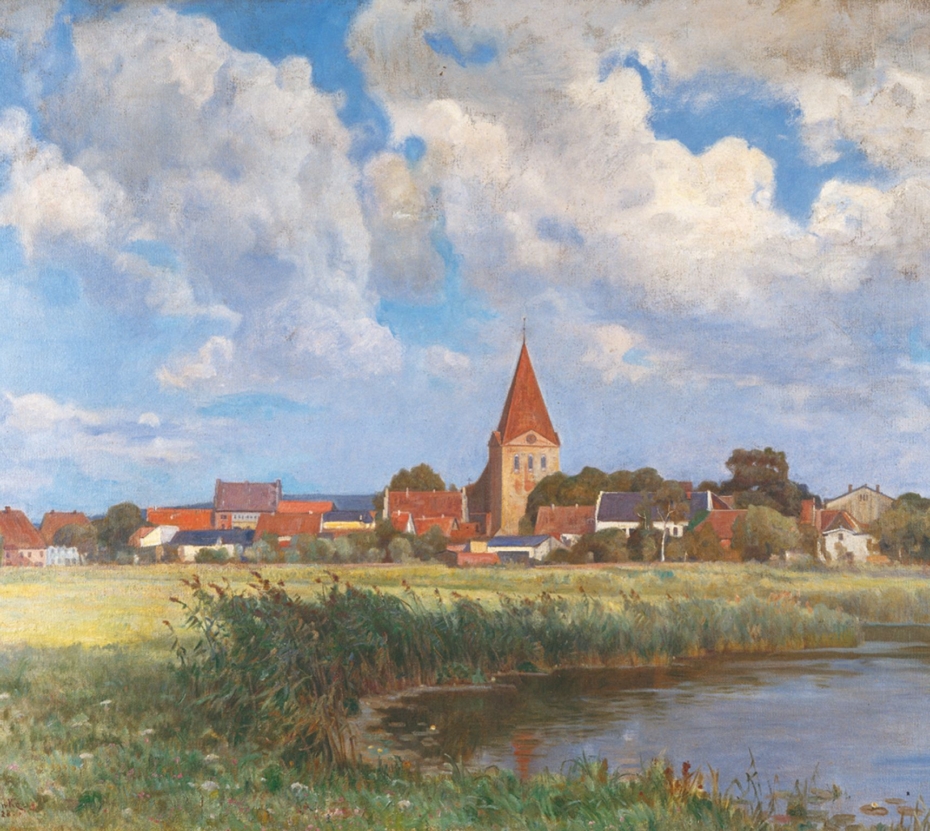
INFOFLASH 95 – IMPRESSIONNISTS COLORS AND LIGHTS FROM ARMENIA – Barbizon, France, May 23 -November 2, 2025
Read the exhibition presentation brochure
The Impressionist movement played an important role in the European history of art… Armenian Impressionism, born in the second half of the 19th century, fully developed in the years 1900-1910 in harmony with European countries and in particular France.
The exhibition organised from 23 May to 2 November 2025 by Impressionisms Routes®, Cultural Route of the Council of Europe, at the Musée de l’Esquisse in Barbizon aims to present to the general public, for the first time in France, artists and works that are little known in our country. Its establishment required close cooperation between our international network and the National Gallery of Armenia in Yerevan. This cooperation has benefited from the full support of the Armenian and French Ministries of Culture, whom we thank warmly.
The National Gallery of Armenia has been a member of the Impressionisms Routes© network since 2023. With this exhibition and beyond the heritage issues of such an event, Impressionisms Routes© continues its initial mission of defending the values of the Council of Europe: freedom, human rights, democracy and the right of peoples to self-determination. Once again, culture proves concretely that it can actively contribute to bringing people together.

Bruno Favel, Head of the World Heritage Mission at the French Ministry of Culture, who has been a valuable supporter of this project, granted us an exclusive interview shedding light on the deep reasons for this exhibition and its inevitable repercussions far beyond the world of Culture and Heritage.
Interview with Bruno FAVEL, Head of the world heritage
Ministry of Culture

What benefits can we expect from increased cultural and heritage exchange between France and Armenia?
The presence of Armenians in France is very ancient, dating back to Antiquity. The last king of Armenia, Leon V of Lusignan, is buried in the Basilica of Saint-Denis, and the National Library of France houses a section of Armenian manuscripts dating back to the 13th century.
The exhibition presented today is part of the Cultural Routes of the Council of Europe program, of which France and Armenia are members. The Impressionism Route is one of the flagship itineraries of this program.
The works exhibited in Barbizon illustrate a little-known art form: that of the Armenian Impressionists. These artists, who often stayed in France, subsequently acquired significant renown in Armenia and internationally. In 1921, upon the creation of the Armenian State, the National Gallery of Armenia assembled the largest collection of these artists. All of these painters were strongly influenced by the French Impressionists. A better understanding of these painters can only strengthen exchanges between our two countries and their respective institutions.
The “Impressionist Colors and Lights of Armenia” exhibition, a first in France! What are the challenges beyond the cultural and heritage aspects?
This exhibition will increase awareness and understanding of Armenian Impressionist painting among the French and Europeans. Armenia has managed to carefully preserve these treasures of Impressionism despite the historical upheavals of the last century.
How can this initiative promote a better understanding of Armenian cultural heritage?
It is always worth reminding the French that Armenia is a country on the borders of Europe and Asia. But Armenia is undeniably European, through its culture, heritage, and civilization.
How can this event draw attention to a struggling country on the margins of Europe?
Since its creation in the 1920s, Armenia has faced a challenge to its cultural and heritage legitimacy. The idea of presenting this exhibition therefore runs counter to this challenge, since it demonstrates the existence of a true Armenian culture.
- Infoflash 95INFOFLASH-95-E-PDF.pdfAdobe Acrobat Document [952.4 KB]Download